
DAM and Collections Management for Cultural Heritage LA 2027


We are busy developing an exciting agenda for DAM and Collections Management for Cultural Heritage LA so keep your eyes peeled for details. Complete the form here to be kept up to date on new speakers and sessions. If you are interested in speaking opportunities, please contact Milly Louch at millyl@henrystewart.co.uk.
In the meantime, take a look at the first six sessions...
In the Arena with AI: How TRPL Is Reimagining Access to History
The opportunity
The Theodore Roosevelt Presidential Library had a rare opportunity: build a new presidential library for the digital age without inheriting decades of legacy systems.
So, the team decided to think differently.
What we did
A behind-the-scenes account of the decisions, challenges, and lessons that shaped the library’s digital strategy when bringing together historical materials held across multiple institutions and creating an AI-ready repository that supports researchers, staff, educators, and museum visitors.
- Why TRPL chose a modern, cloud-native collections foundation.
- How AI is accelerating metadata and archival workflows while keeping humans in the loop.
- How access controls help protect sensitive content.
- How trusted collections data is being transformed into public-facing experiences, including.
- AI-powered research.
- An interactive Theodore Roosevelt.
A fundamental question for museums, archives, and cultural institutions:
- Where do we actually start with AI?
- TRPL offers a practical answer: start with the foundation.

Matt Briney, Chief Communications Officer, Theodore Roosevelt Presidential Library
DAM Strategy at the LA Phil Archives
The Digital Debt We Carry
The challenges we face
- Museums, archives, and cultural heritage organizations continue to accumulate vast quantities of born-digital content.
- Managing digital collections is no longer just about implementing a digital asset management system (DAMS), but about sustaining, governing, and preserving the assets in maturing technology solutions.
Meeting the challenges
Drawing on the LA Phil Archive's experience managing nearly one million digital assets across a decade-old DAMS
- The unexpected opportunities that emerge when digital archives coexist alongside active organizational content in a major performing arts institution.
- Insight into how cultural heritage and live performance documentation can be managed at scale while serving thousands of diverse users across multiple departments and partners.
Covering performances, museum exhibit material, institutional records, photographs, audio, and video assets - all flowing through an enterprise-wide platform,
A candid case study
Key topics relevant for museums, archives, libraries, and other collecting institutions, including:
- Integrating archival collections into enterprise DAMS environments.
- Managing born-digital and digitized collections at scale.
- Balancing access, preservation, and operational demands.
- Addressing large backlogs created through migration projects.
- Developing digital accessioning and appraisal workflows.
- Establishing preservation priorities when resources are limited.
- Navigating the realities of decentralized records management.
- Reassessing assumptions about retention, curation, and trusted repositories.
Plus lessons learned from a multi-year migration effort that moved assets from legacy storage systems, into SharePoint environments and a centralized DAM solution.
Particular attention is paid to the challenges of maintaining archival oversight when departments manage their own digital records, resulting in evolving responsibilities for archive professionals.
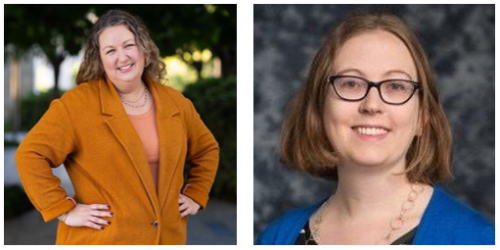
Meredith Reese, Senior Manager, IT Services, Los Angeles Philharmonic Association
Michele Beacham, Archivist, Los Angeles Philharmonic Association
Built for People → Building for Machines
Built for People
Making collections accessible
For the last few decades, cultural heritage organizations have built digital infrastructure assuming people would be the primary consumers of collections information.
AI changes that assumption: machines increasingly sit between collections and audiences: searching, synthesizing, interpreting, and translating institutional knowledge.
Building for Machines
Making collections machine-interpretable
How should we be thinking about:
- Preparing collections for machines, not just people?
- Preserving context, not just content?
- Making collections interpretable, not just readable?
- Building strategies around capabilities, not companies?
- Letting machines mediate; keep humans accountable?

Nik Honeysett, Director and CEO, Balboa Park Online Collaborative
Whose Knowledge? Whose Decision?
AI, Consultation, and Repatriation
The Opportunity
Artificial intelligence offers collections professionals new ways to locate information, synthesize records, and support complex research. In Tribal consultation and repatriation, these tools may reduce administrative burdens and improve access to collections information for institutions to share with Tribal Nations.
Questions
- Could AI identify Tribal Nations with a relationship to a collection, summarize consultation, weigh evidence of cultural affiliation, or draft an institutional determination?
- When does assistance become interpretation, or efficiency displace human judgment?
- What level of AI support is appropriate when dealing with information considered sensitive, secret, or proprietary?
Observations
- Technical capability alone does not establish whether sensitive tasks should be delegated.
- Information shared in consultation may also move beyond its original context. When entered into institutional systems: it can be retained, aggregated, linked to other records, shared, or reused for purposes not anticipated when it was provided.
- Indigenous data sovereignty requires determination of who has authority over how knowledge is:
- Documented
- Interpreted
- Combined
- Retained
- Shared,
- Reused
As well as who can access it.
Answers
Drawing on federal collections management and repatriation practice:
- An examination of the boundaries between appropriate AI assistance and responsibilities grounded in professional judgment, institutional accountability, consultation, and Tribal authority.
- An evaluation of provenance, context, transparency, access, and trust across the information lifecycle.
Bottom line objective
Identifying the delicate between the uses of AI that may genuinely help collections work and the protection of information entrusted to institutions in consultation.
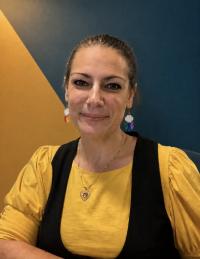
Jenna Domeischel, National Collections and Repatriation Lead, U.S. Army Corps of Engineers
Digital Preservation
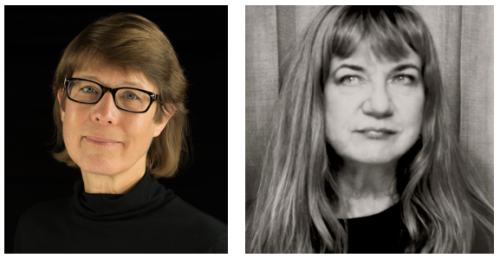
Moderator: Linda Tadic, CEO, Digital Bedrock
Panellists include: Alexandra Bernet, Lincoln Center for the Performing Arts
One System, Twice the Archive
Modernizing DAM and Collections Management at the Magnes Collection of Jewish Art and Life at the University of California, Berkeley
The world we’ve left behind
· Our collections team of five relied on a legacy CMS requiring VPN access to servers overseas and a never-been-organized file-folder system of 82,000 collections’ object assets just to conduct our everyday work.
· To associate assets with records required uploading to the overseas server and then typing in the exact file path and file name for each image.
· Our public-facing search portal timed out, forcing users to refresh their cookies between browsing each search result page.
· We had a decades-long workaround because we did not have an efficient system for linking images to records or a user-friendly search portal to post collections images on Flickr.
· The setup wasn’t just slow. It limited what our team could take on—a reality many GLAMP institutions know too well.
The challenge
Then came the real test: the acquisition of the Roman Vishniac Archive. At 30,000 objects, it would double our collections holdings and more than triple collections’ assets. Taking it on without adding staff meant modernizing, fast.
What we did
· How the team finally unified their collections and digital asset management.
· How we built something bigger: a public portal delivering a once-impossible level of access.
· The business case we made, the choices we faced, and what changed after go-live.
Covering:
· Why legacy systems cap what teams can accomplish.
· How to build a strong case for modernization.
· Ways to scale collections without scaling headcount.
· Practical tips on unifying collections, digital assets, and public access.

Tina M Kremzner-Hsing, Database & Digital Asset Manager, UC Berkeley
Agenda Themes:
Morning Sessions: Strategy and Standards
- Digital preservation planning for the long term.
- Metadata strategies that enable discovery.
- Choosing and implementing DAM and collection management systems.
- Building the business case for digital infrastructure investment.
Afternoon Sessions: Implementation and Innovation
- AI and machine learning for heritage collections.
- Digitization workflows that scale.
- Managing born-digital archives.
- Community engagement through digital collections.
- Rights, ethics, and repatriation in the digital age.
Networking Sessions
- Lunch/break peer roundtable.
Case study lightning talks